Succession and Continuity

Prepare the next chapter before urgency writes it.

Succession is not a closing event. It is the deliberate transfer of leadership, trust, responsibility, and goodwill from one chapter of a practice to the next.

What a plan has to settle

A strong succession plan should answer four questions.

The earlier that work begins, the more choices the founder, team, and incoming doctor can preserve.
How a partnership begins

The four questions

  • When should your role change?

    Set a timetable that reflects your goals, health, family, finances, and appetite to keep practicing.

  • What role do you want next?

    Clarify whether you want to lead, mentor, reduce clinical time, transition gradually, or step away on a defined schedule.

  • How will trust transfer?

    Plan how patients, team members, referral partners, and the community will experience the change.

  • What needs to be true operationally?

    Strengthen leadership, systems, reporting, recruiting, and ownership pathways before the practice depends on a single transition moment.

Growth and succession together

Build succession inside the growth plan.

A practice should not have to stop improving while it prepares for transition. Valére works with founder-doctors to strengthen the business, develop leadership, and make the practice more durable while the succession path remains flexible.
A practice owner in a white coat standing at the doorway of her operatory while her team treats a patient.

Goodwill and trust

Treat goodwill as something that has to move.

Where goodwill may live

Trust that has to move

  • The doctor's name
  • Patient relationships
  • Team culture
  • Referral network
  • Clinical reputation
  • Community presence
A dentist walking a patient out through the practice after her appointment.
Patient relationships
Five members of a practice team standing together for a clinical huddle.
Team culture

What a continuity plan does

Deliberate, not assumed

  • Identify where that trust sits
  • Introduce the next leader deliberately
  • Give patients and team members enough time to believe in the handoff

How a transition unfolds

A deliberate transition process

01

Confidential conversation

Understand the founder's goals, concerns, preferred timetable, and non-negotiables.

02

Transition design

Define the future role, leadership needs, ownership path, and continuity plan.

03

Operating preparation

Strengthen the systems, team, and reporting the next chapter will depend on.

04

Leadership handoff

Sequence communication, mentorship, patient introductions, and responsibility transfer.

05

Ongoing review

Revisit the plan as people, timing, and circumstances change.

Timing
You do not need a fixed retirement date to begin.

A first conversation can be useful when succession is near, several years away, or still taking shape.
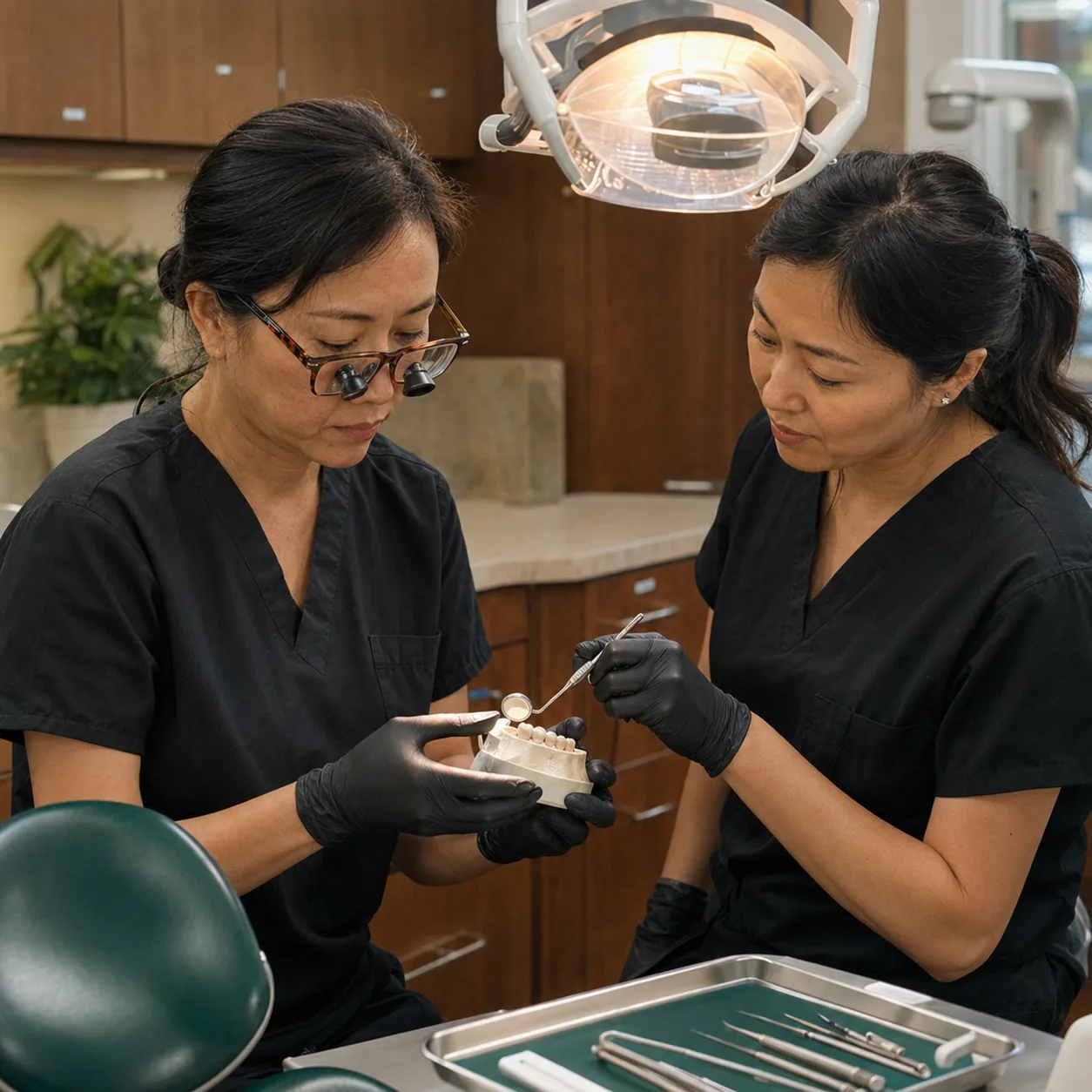
Two clinicians examining the fit and finish of a restoration.
A dentist and an advisor signing partnership documents at a table.
A senior dentist pointing out detail on a radiograph to a younger clinician.
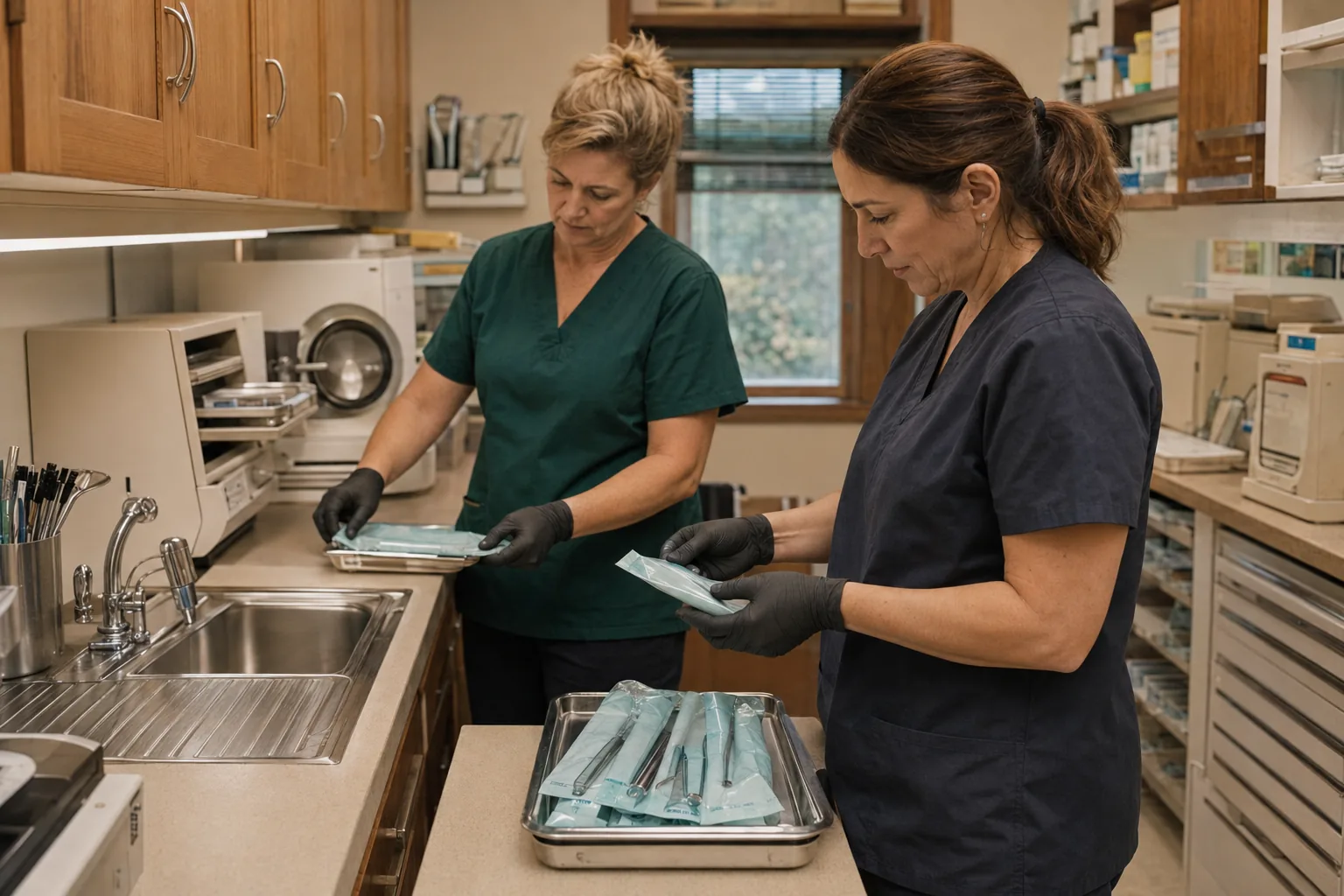
Two team members processing instruments together in the sterilization area.

Start a confidential succession conversation.

The purpose is to create a better set of options before time narrows them.